
Measuring and Evaluating the CGIC for Sustainability
A CGIC is only as good as its ability to keep producing results over time. The only way to know if an agency’s CGIC is staying on track is to measure it. Regularly evaluating the program helps identify challenges early, shows leadership where improvements are needed, and relays the value of the CGIC to agency executives, prosecutors, funding partners, and the community. One way a CGIC can do this is to partner with researchers or a local university. They can help analyze data, evaluate trends, and provide an independent view of program performance. Their findings can identify strengths, uncover gaps, and provide solid evidence to support funding requests or changes to CGIC operations. CGIC: Reviewing the Evidence examines available research on CGICs and offers information on the different methodologies that have been used to evaluate CGIC performance and impact.

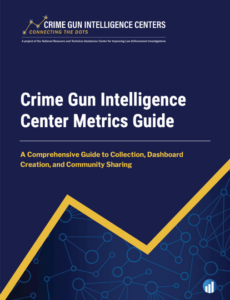
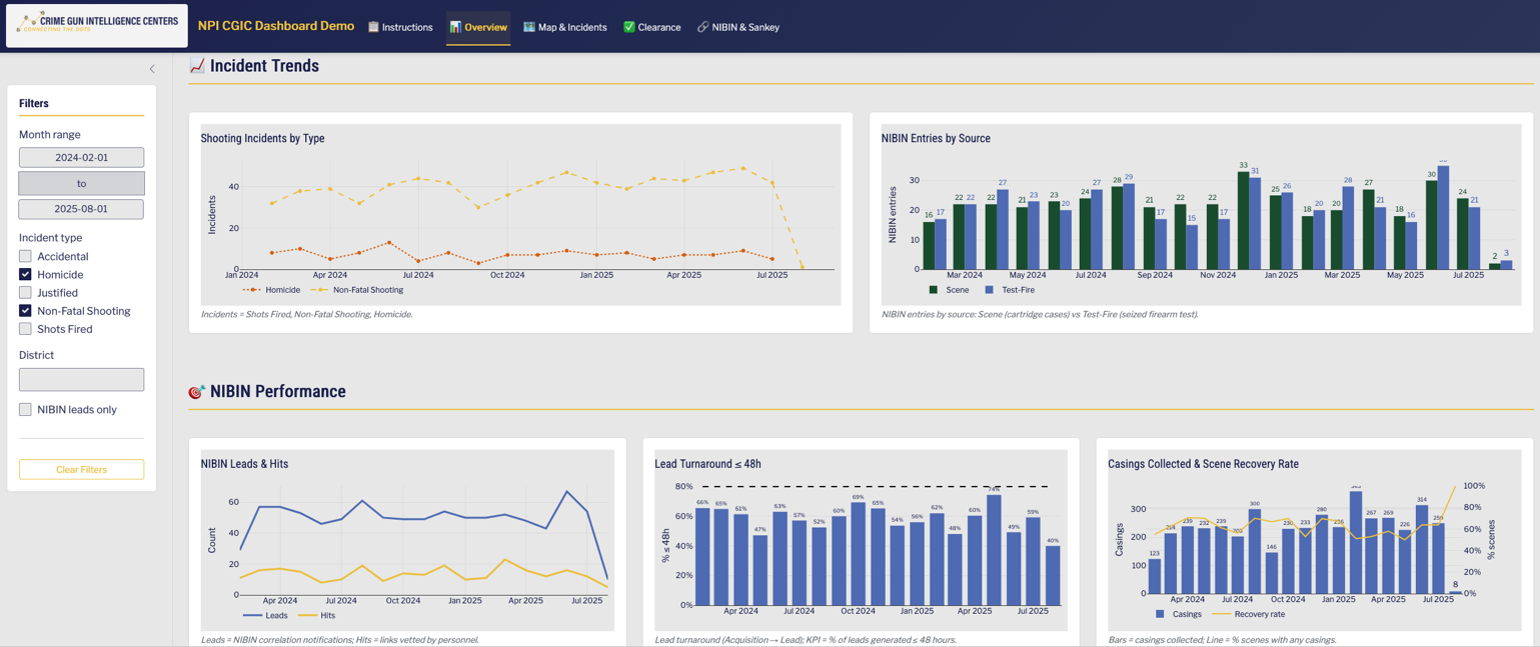
Tracking how many cartridge cases are entered into NIBIN, how quickly leads are generated, how long it takes investigators to act on those leads, and whether firearm traces are being completed tell you whether day-to-day CGIC processes are operating in compliance with best practices. It is also just as important to evaluate the outcomes of the agency’s CGIC investigations, such as shooting clearance rates, successful prosecutions, and trends in shootings and firearm homicides.
One number will never tell the whole story, but when they are evaluated together, they can show whether the CGIC is having an impact. The CGIC Metrics Guide and the CGIC Dashboard Demo provide detailed information on CGIC metrics that should be tracked and why, as well as other resources to monitor performance over time.
A sustainable CGIC does not happen by accident. It requires leaders who pay attention to the numbers, look for problems before they become issues, and make adjustments as the program grows. Agencies that routinely measure performance, evaluate the engagement of their people and partnerships, and use data to improve operations are far more likely to sustain the CGIC, long after the initial excitement of implementation has worn off.
Agencies can use the resource below to self-evaluate and score the sustainability of the CGIC. It is recommended that newly established CGICs use it as a baseline to identify sustainability risks from the start and for already established CGICs to use it periodically to track risk factors and compare their sustainability score with prior reviews.