Providing Community Feedback and Outreach
All CGIC stakeholders, including law enforcement agencies, ATF, and state and federal prosecutors, should develop a unified community outreach strategy explaining the CGIC's role and it’s successes to the public. The strategy should highlight cases where individuals associated with multiple shootings or violent crimes were identified, arrested, and prosecuted to ultimately make the community safer. This could be done in a variety of settings, including community meetings, social media posts, and local news stories. The goal of the community outreach strategy is to highlight the success of the CGIC and increase the transparency and trust between law enforcement and the communities they serve.

When developing a community outreach strategy, it is vitally important to ensure that all CGIC stakeholders agree on how much detail will be shared with the public. While some agencies choose to share the details of CGIC and NIBIN operations, others feel that they may be giving too much information about how gun crimes are investigated to the offenders. Every community is different, therefore, the outreach strategy should reflect the community it is serving.
Door Hangers
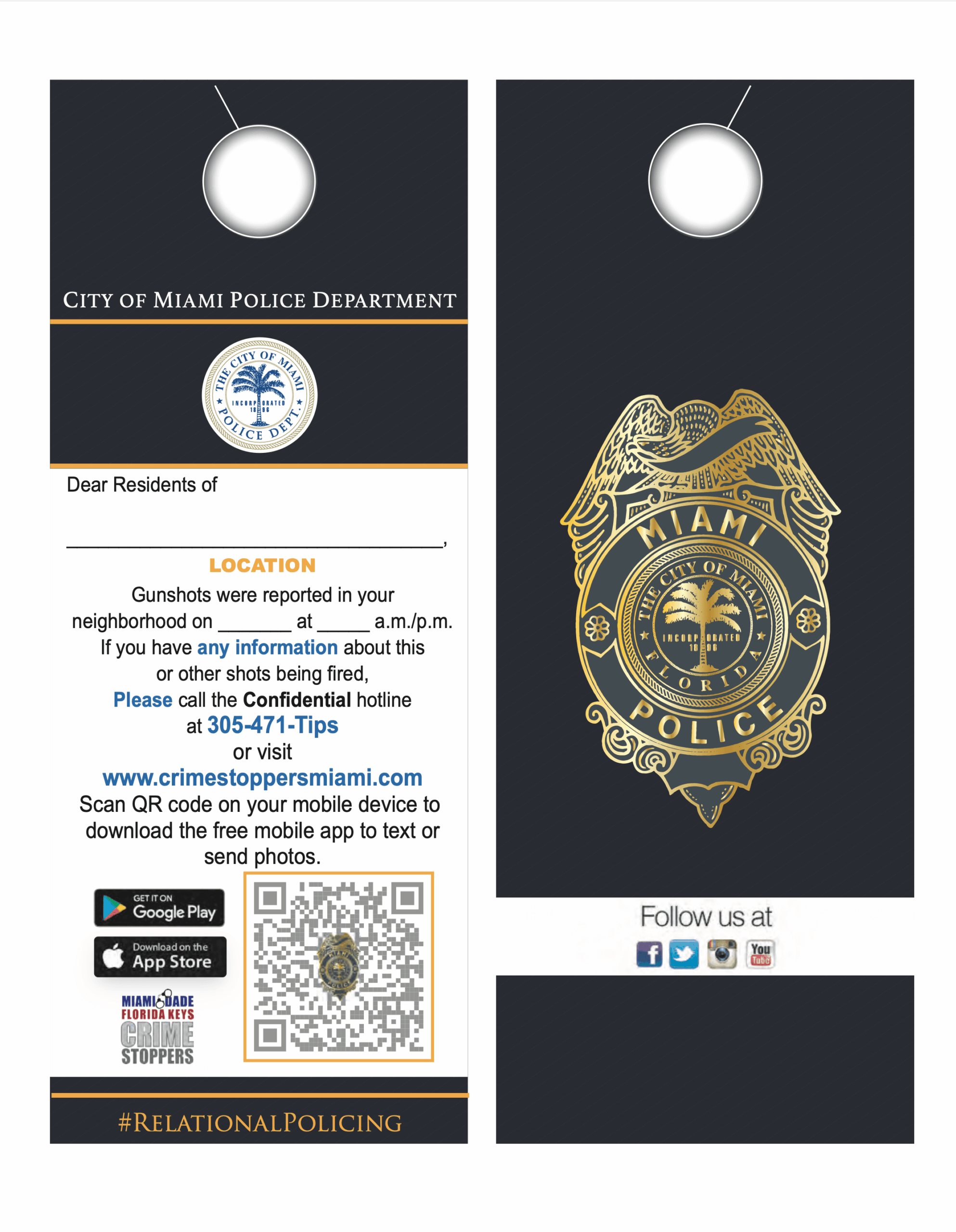
After a shooting event or a shots-fired call for service, law enforcement typically canvas for potential witnesses and cartridge casings. In many cases, witnesses may not want to come forward for fear of retaliation. To encourage witnesses to provide feedback to law enforcement, door hangers can be left behind. This allows them to come forward without anyone seeing them speaking with law enforcement. The door hangers explain where and when the event occurred and provide contact information that community members can use to contact law enforcement anonymously.

On many occasions, thanks to the door hanger initiative, we have been alerted to NIBIN evidence that has led to the identification of suspects. It is my belief that without this initiative, we would lose the opportunity to recover valuable NIBIN evidence required for the investigative intelligence products created by MPD CGID. The door hangers provide citizens with an outlet and the anonymity to contact our agency and provide valuable intelligence. This has resulted in the successful apprehension of prohibited persons or suspects in violent crimes who might otherwise remain undetected and continue to threaten the community.
Detective Robert Thompson
City of Miami Police Department
Social Media
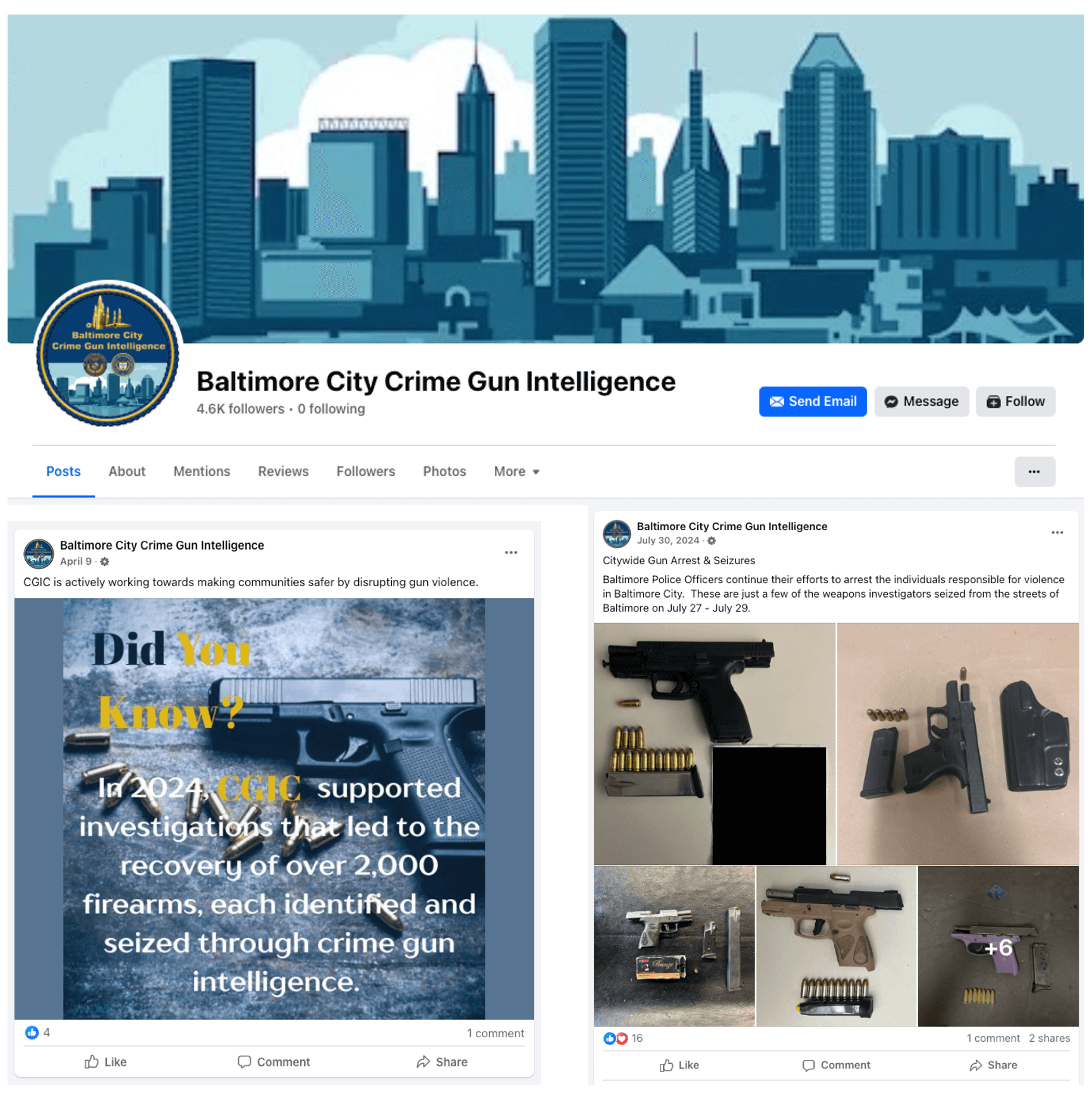
With most people having smart cell phones today, social media can be a great way to reach the community, especially younger audiences. Law enforcement and other CGIC stakeholders can use social media to keep the community informed and provide them with feedback about the CGIC’s work and successes. This can strengthen community relationships because people can interact with the posts and see the action law enforcement is taking to combat violent gun crime in their neighborhoods.
*Note: You must be logged into Facebook to access this page.