What is a Regional Crime Gun Intelligence Center (CGIC)?
The primary objective of a CGIC is to provide timely crime gun intelligence, such as National Integrated Ballistic Information Network (NIBIN) leads and gun tracing information to identify perpetrators and trace the origins of firearms, with the ultimate goal of mitigating future acts of violence.
A standard, single-agency CGIC centers its operations within a single department, focusing on gun crime occurring within that agency’s jurisdiction. Its operations, tools, and investigative workflows are largely internal, which can limit the visibility of cross-jurisdictional shooting patterns or access to information and intelligence gathered by neighboring jurisdictions.




A Regional CGIC, in contrast, expands the CGIC model across multiple jurisdictions by creating a shared framework for evidence collection, ballistic processing, intelligence sharing, and coordinated investigations. It represents a partnership between local, state, and federal law enforcement and intelligence agencies aimed at gathering, analyzing, and disseminating information about gun crime affecting jurisdictions within a specific geographical area. A Regional CGIC model attempts to eliminate the “my case” ideology of investigating gun crimes by creating collaborative efforts across jurisdictional boundaries and getting participating jurisdictions involved in investigating gun crimes across the region. This model is especially valuable for smaller agencies that lack the staffing, funding, or call volume needed to justify their own NIBIN equipment or dedicated CGIC personnel. Through a regional partnership, those agencies gain access to NIBIN services, shared intelligence, and unified investigative practices, ensuring that crime gun intelligence is produced consistently across the entire region. Smaller agencies benefit from the technical and analytical capacity of larger partners, while larger agencies gain visibility into gun crime trends and evidence recoveries occurring in neighboring communities. For a Regional CGIC to be effective, all involved agencies should receive the same level of support and collaboration from stakeholders, regardless of size. The result is a unified, region-wide understanding of the prolific guns, offenders, and shooting patterns within the entire region, rather than within just one agency’s jurisdiction.

History of Regional CGICs
The origin of Regional CGICs can be traced to the first local CGIC in Denver, Colorado. After establishing the first CGIC in 2013, Denver, Colorado personnel believed they could expand their impact on crime in the Denver metropolitan area by taking a regional approach. Working with leaders from neighboring law enforcement jurisdictions, the Regional Anti-Violence Enforcement Network (RAVEN) was established in 2019. This effort incorporated multiple existing task forces and specialty units under the unified mission of addressing violent crime.[1] Twelve law enforcement agencies assigned an investigator to RAVEN and increased NIBIN inputs as a result. Interviews with RAVEN personnel revealed positive perceptions of these efforts, with most reporting an increase in available resources and more effective investigations.
Since then, various jurisdictions have successfully expanded their CGIC programs to achieve a larger footprint and enable smaller agencies to participate in the CGIC process. Palm Beach County, Florida intentionally built a county-wide approach to CGIC, housed within the Sheriff’s Office. This regional approach enabled eight jurisdictions within the county to submit ballistic evidence through the City of West Palm Beach Police Department.[2]
Recognizing that many gun offenses in Phoenix were related to crimes occurring in neighboring jurisdictions, the Phoenix, Arizona, Police Department was another one of the first agencies to take a regional approach to gun crime intelligence by establishing the Phoenix Metro NIBIN Program in 2010. As part of this effort, Phoenix trained personnel from other agencies to enter NIBIN data thereby increasing the size of the NIBIN database. Phoenix also hosted monthly “shoots” where representatives from other agencies could test fire guns and directly enter their evidence into NIBIN. By 2013, more than 13 other agencies were participating in the Phoenix Metro NIBIN Program, and Phoenix had become a leading site for the number of acquisitions entered into NIBIN and the timeliness of NIBIN entries.[3]
In Baltimore, Maryland, an existing CGIC team of analysts focused on NIBIN leads for the Baltimore Police Department and surrounding agencies in Maryland, Delaware, and Washington, DC. Many of the NIBIN leads identified in the Baltimore CGIC evaluation were related to incidents outside of Baltimore, most commonly in Baltimore County, Washington DC, and Prince George’s County.[4] As such, these regional approaches can increase intelligence for investigators.
Other agencies are in the beginning stages of establishing regional partnerships to increase the solvability of gun crimes. For example, in Winston-Salem, North Carolina, the department has set a goal to establish a NIBIN hub that can be used to link crime guns used in Winston-Salem to other neighboring communities, such as Greensboro, High Point, and Kernersville.[5] These expansions can be applied in other places to reduce burdens on state crime lab personnel.
Why Establish a Regional CGIC?
Since gun crime offenders may not follow jurisdictional boundaries and commit crimes across various areas, cross-jurisdictional collaboration among agencies is crucial to effectively combating gun crime. A Regional CGIC model enables law enforcement to respond to gun-involved crimes more efficiently and systematically by fostering partnerships with different agencies operating in a locality and working together to target the most prolific gun crime offenders in the region. The presence of a robust gun crime investigative body within a region that successfully uses state-of-the-art technology and investigative techniques, and through which information flows to units within each involved agency, serves as a powerful tool to combat gun crime.
Regional CGICs can also broaden access to core crime gun intelligence exploitation tools that would be otherwise unavailable. For example, through a Regional CGIC partnership, an agency or crime lab that has its own NIBIN infrastructure can service agencies that may not have the resources to establish their own. This ensures that cartridge casings and firearms are entered into NIBIN across the region, allowing investigators from all participating jurisdictions to have a clear picture of where the most prolific guns and offenders are operating. This can, in turn, assist in getting them off the streets.

Who Should Establish a Regional CGIC?
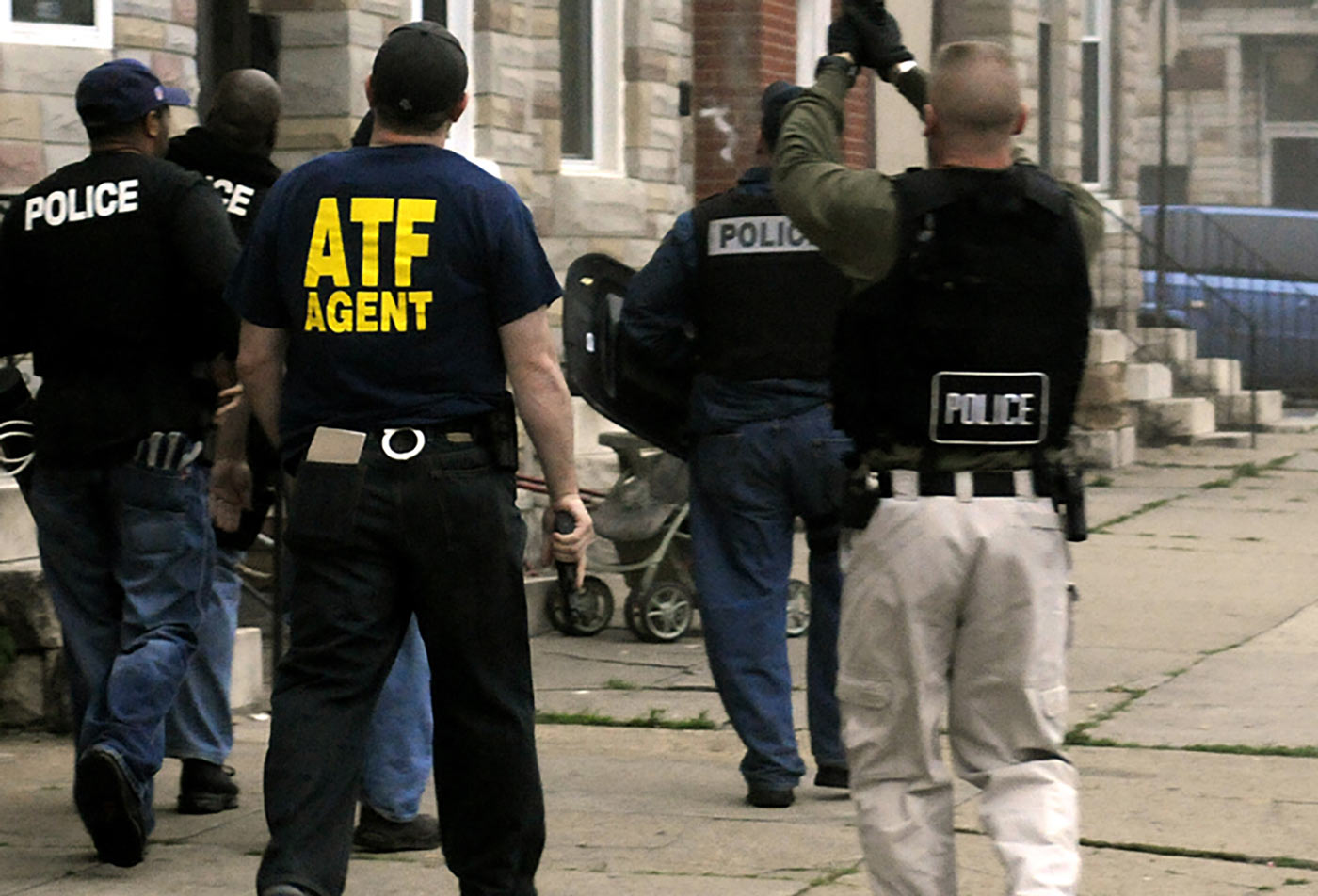
Regional CGICs can be established by a number of different agencies. Depending on the area, the Regional CGIC might be led and established by a city police department, a county sheriff’s office, or even the local Bureau of Alcohol, Tobacco, Firearms, and Explosives (ATF) field office. Usually, the agency in charge of implementation has a BrassTrax machine in an unrestricted location accessible to other agencies and has strong connections with local agencies and stakeholders in the region. This makes it more natural for that agency to take the lead in the Regional CGIC.
Works Cited:
[1] Uchida, C. D., Swatt, M. L., Anderson, K., & Hock, S. (2020). Focus on gun violence: An evaluation of Denver’s CGIC and RAVEN programs. Justice & Security Strategies, Inc. https://crimegunintelcenters.org/wp-content/uploads/2021/01/JSS-Eval-Denver-CGIC-Final.pdf
[2] Fallik, S., Atkin-Plunk, C., & Crichlow, V. (2024). Palm Beach Country, Florida Crime Gun Intelligence Center (CGIC) Final Report (p. 158) [Final Report]. Florida Atlantic University. https://crimegunintelcenters.org/wp-content/uploads/2024/09/CGIC-Final-Report-240724.pdf
[3] Katz, C. M., Flippin, M., Huff, J., & William King. (2021). Evaluation of the Phoenix Crime Gun Intelligence Center (p. 62). Center for Violence Prevention & Community Safety, Arizona State University. https://crimegunintelcenters.org/wp-content/uploads/2021/05/Evaluation-of-the-Phoenix-Crime-Gun-Intelligence-Center_Published-Version.pdf
[4] Swatt, M. L., Uchida, C. D., Goedert, A. M., & Wooditch, A. (2024). An Evaluation of the Baltimore Police Department’s Crime Gun Intelligence Center. http://crimegunintelcenters.org/wp-content/uploads/2024/05/BPD-CGIC-Eval-Final-Report-3-28-24.pdf
[5] Gauldin, A. L., & Ricardo, R. L. (2023). 2019 Crime Gun Intelligence Center Final Analysis Report (p. 64). Winston-Salem Police Department. https://crimegunintelcenters.org/wp-content/uploads/2024/05/2019-CGIC-Grant-Final-Analysis-Report-Final.pdf
[6] Rhodes, T. (2021). Evaluation of the Little Rock Police Department Crime Guns Intelligence Unit and ShotSpotter: Final Report. https://arktimes.com/wp-content/uploads/2021/03/2021-LRPD-TIPS-Evaluation-Final-Report.pdf